
For years I believed every plateau had the same answer: train more. Fatigue meant I was getting soft. A sore throat meant push through it. So I kept adding sessions, my results kept getting worse, and it never occurred to me that those facts were related. It took a wrecked race, one blunt sentence from my coach, and a screenless band on my arm to understand that I was not underprepared. I was chronically under-recovered, and had been for years.
I'm Quinn, 38, an amateur triathlete with a full-time job, a mortgage, and a training log going back nine years. I am not talented. What I had instead was capacity for punishment, and for a long time that worked. I got faster every season just by stacking hours. Somewhere around 35, the curve flattened, and my response was the only one I knew: more is more. Two-a-days. Masters swim at 5 a.m. after a late brick the night before. I wore fatigue like a credential.
The race I trained too hard to finish
Last season I targeted a half-distance race and gave it the most brutal build of my life. Biggest volume I had ever logged, almost no down weeks, and a head cold in the final month that I trained straight through because the plan was sacred. Race day, I had nothing. Just an empty tank from the first hour of the bike. I jogged and walked the run, watched my goal time dissolve, and crossed the line feeling something worse than disappointment: confusion. I had done more than everything. When I called my coach that night and started sketching an even bigger build for the fall, he cut me off.
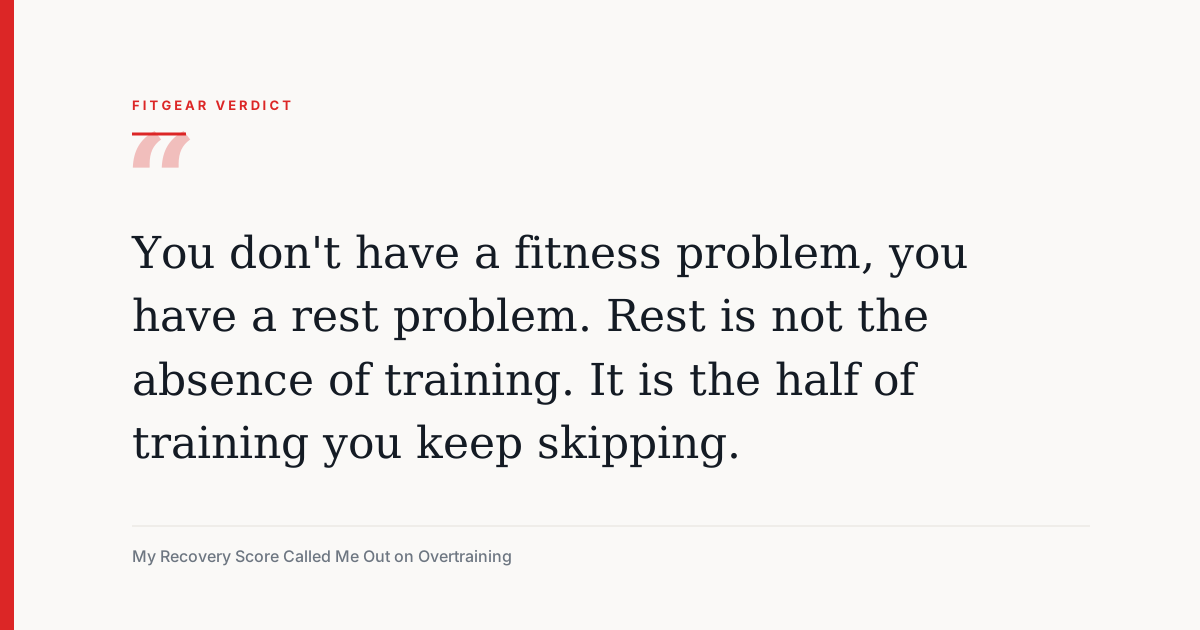
You don't have a fitness problem, you have a rest problem. Rest is not the absence of training. It is the half of training you keep skipping.
I wanted to argue. I had heard some version of this before and always filed it under things coaches say to fragile people. But I had just donated a race entry fee to the pavement, so for once I shut up and listened.
Everything I tried before I tried listening
To be fair to past me, I did not go straight from denial to enlightenment. I tried a bunch of things first, and they all failed for the same reason: none of them actually told me anything about my body.
- Training harder anyway, on the theory that the breakthrough was one more brutal block away. It was not. I just got sick again, right on schedule.
- Scheduling random rest days, which I spent marinating in guilt, convinced I was losing fitness by the hour, and usually 'made up for' with a double the next day.
- A smartwatch with recovery features that I only wore during workouts. It cannot tell you how you slept if it spends every night on the charger, and I ignored whatever it did say.
That last one stung to admit. The data existed. I had paid for it. I just treated it like a stopwatch with delusions of grandeur.
A band with no screen and no opinions about my steps
My coach suggested WHOOP 4.0 for one specific reason: it is designed to never come off. There is no screen, no notifications, no step count, nothing to check mid-ride. It is a small fabric band, worn on the wrist or bicep, that quietly measures things like heart rate variability, resting heart rate, respiratory rate, and sleep, all day and all night. It even charges from a battery pack that slides onto the band, so it never has to leave your body. For someone whose previous wearable lived on a charger, that design choice turned out to be the entire point: there was nothing to look at, so there was nothing to ignore.
Every morning it hands you a recovery score based on how your body actually responded overnight: green, yellow, or red. During the day it tracks strain, a measure of how hard you are taxing your system, and suggests how much load fits your current state. The first two weeks were humbling. Days I felt heroic, the data showed a body still digging out from the previous session. The morning after two beers and a 10 p.m. dinner, my recovery cratered even though I felt fine. It was the first time anything had connected my choices to my capacity in plain numbers.
How I train now
The system I settled on is almost insultingly simple. Green days, I go hard with a clear conscience: the intervals, the long brick, the swim set that used to scare me. Yellow days, I train but cap the intensity. Red days, I actually rest, and here is the part that surprised me: the guilt mostly evaporated. A red score reframes rest from weakness into instruction. I am not skipping training. I am doing what the training requires. My coach now builds my week around trends in the data instead of a fixed plan carved in stone, and hard days landed on recovered days feel like a cheat code.
What actually changed
I will not pretend a wristband made me a different athlete, and I am not going to invent numbers. But the pattern of my seasons changed in ways I can state plainly. The every-block illness cycle, that reliable sore throat three weeks into any hard build, stopped. I completed my next two builds without missing a week. At the same race the following season, I set a personal best and finished feeling like I had raced, not survived. I also learned what alcohol does to my overnight recovery, and what a late heavy meal costs me the next morning. I still enjoy both sometimes. Now I schedule them like training decisions.
The honest fine print
WHOOP is not a slam dunk for everyone. There is no buy-it-once option: it is subscription-only, and over a few years that adds up to real money next to a one-time smartwatch purchase. The recovery score can start to rule your mood if you let it, and a red score has talked me out of sessions I probably could have handled. It is guidance, not gospel, and part of maturing with the tool is learning when to overrule it. The lack of a screen genuinely annoys some people who want time and pace on their wrist. And none of this is medical measurement. It is a training tool, not a diagnosis, and no score replaces a doctor when something feels wrong.
Here is what I would tell the version of me sitting in a parking lot after that bombed race: you were never one brutal block away. You were one honest rest day away, for years. If your instinct when things stall is to add more, a recovery score will call you out. Mine did. It was the most useful insult I have ever paid for.
Disclosure: this post reflects my personal experience as an amateur athlete, not medical advice. FitGear Verdict may earn a commission if you buy through links on this site, at no extra cost to you. That never changes how we describe a product's shortcomings, including this one's subscription price. - Quinn
Community discussion
Enjoyed this story? Share your thoughts below.